
Outboard Fuel Injector Problems: Symptoms, Causes & Fixes by Brand
Outboard fuel injector problems show up as rough idle, hard starting, hesitation, poor mileage, and rough mid-range performance. The cause is almost always ethanol-laden E10 fuel sitting through winter storage combined with marine heat cycling. Yamaha, Suzuki, Honda, Tohatsu, and Mercury 4-strokes all clog the same way. Professional ultrasonic cleaning runs $30-35 per injector vs $200-500 each to replace OEM.
From our own bench: on the outboard injectors we flow-test (Yamaha, Suzuki, Mercury), cylinder-to-cylinder spread typically comes in around 20% before cleaning and drops to about 7% after. That imbalance is the root of most of these symptoms. Full flow-data study here.
Real outboard injectors we've cleaned and flow-tested, each with its own before/after bench numbers:
- Yamaha F115 (CDH210)
- Yamaha F200 / F225 (CDH240)
- Mercury OptiMax fuel injector (Siemens 37006)
- Mercury 150-300 HP 2-stroke EFI (18715)
- Mercury / Mariner 65-115 HP 4-stroke EFI (39-NO41)
Already know it's the injectors? You can send them in here.
If your outboard is idling rough, hesitating on acceleration, hard to start, or burning more fuel than it used to, there's a good chance the fuel injectors are the problem. We see it constantly. A boat runs fine all season, sits through the winter, and comes back in the spring with a whole list of symptoms that all point back to the same thing: dirty injectors. That said, injectors aren't the only thing that makes an outboard run rough — here's our diagnostic guide covering the seven most common causes if you want to rule things out in order.
This isn't a one-brand problem. Yamaha, Suzuki, Honda, Tohatsu, Mercury 4-strokes -- they all use electronic fuel injection, and they all get clogged the same way. The specifics vary by brand and model, but the root causes and the fix are the same across the board.
We've cleaned thousands of outboard injectors from all these manufacturers, and we're going to break down exactly what goes wrong, what it looks like, and what you can do about it.
Why Outboard Fuel Injectors Clog (And Why It's Worse Than Cars)
Automotive fuel injectors clog too, but outboard injectors deal with a harsher environment on every front. Understanding why they clog helps you prevent it, or at least catch it before it gets bad.
Ethanol Fuel (E10)
This is the number one culprit, and it's not close. E10 gasoline contains 10% ethanol, which is hygroscopic -- it absorbs water from the air. In a marine environment, there's plenty of moisture to absorb. Over time, the ethanol separates from the gasoline in a process called phase separation. What you're left with is a layer of water-alcohol mixture at the bottom of your tank and degraded gasoline on top.
That separated ethanol turns into a gummy, corrosive residue that coats everything in the fuel system. It attacks rubber seals, o-rings, and fuel lines from the inside out. The debris from that degradation travels through the fuel system and ends up inside the injectors, where it bakes onto the pintle and clogs the micro-filter screens. Even if the engine starts and runs, the injectors are spraying through a layer of varnish that changes the flow rate and spray pattern.
Fuel stabilizer helps slow the process down, but it doesn't stop it. If you're running E10 and storing the boat for 5-6 months over winter, the injectors are soaking in degrading fuel that entire time. After a few seasons of this cycle, the buildup is significant.
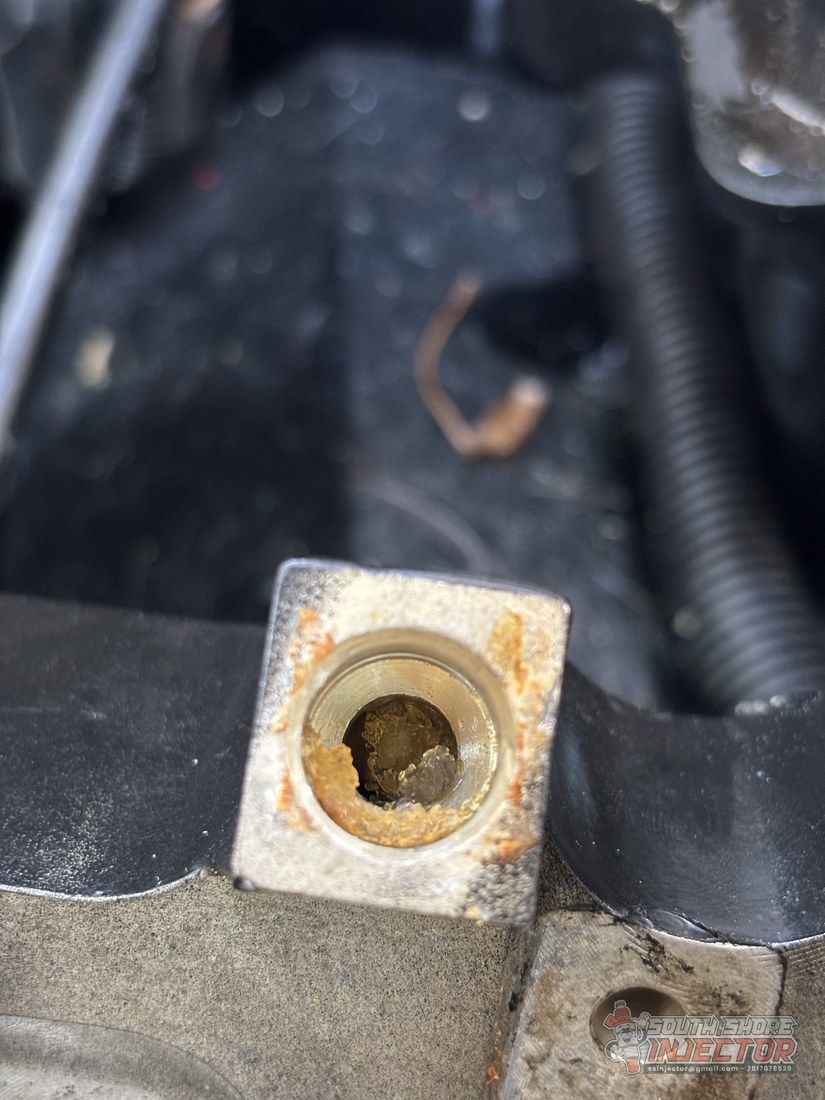
Winter Storage
A boat that runs from May to October and sits from November to April has spent half the year with stagnant fuel in the system. Fuel degrades whether the engine runs or not. The volatile compounds evaporate, leaving behind heavier residues. Combined with ethanol absorption and temperature swings in an unheated storage facility, you get accelerated deposit formation in the injectors, fuel rails, and VST (vapor separator tank).
This is why spring commissioning is when most injector problems show up. The engine cranks forever, idles rough at the dock, smokes more than usual, and doesn't clear up like it used to. Those are classic signs that 5 months of sitting have taken their toll on the fuel system.
Salt Air and Humidity
Saltwater boaters have it worse. Salt air accelerates corrosion on every metal surface, including the injector internals. Even freshwater boaters deal with higher humidity than a car sitting in a garage. The marine environment is just harder on fuel system components across the board.
Low Run Hours
Here's one that surprises people: engines that run infrequently actually have more injector problems than engines that run a lot. An outboard that gets used every weekend keeps fuel flowing through the system, which prevents deposits from building up. An outboard that runs 20 hours a year has fuel sitting stagnant in the injectors for weeks or months at a time between uses. That idle time is when deposits form.
VST and Filter Breakdown
Every EFI outboard has a vapor separator tank (VST) with an internal filter screen, and most have a high-pressure fuel filter between the VST and the injectors. When these filters start to break down from ethanol exposure, the debris they shed goes straight into the injectors. We've pulled injectors that were clogged not from fuel deposits, but from filter material that disintegrated and got pushed through the system. This is especially common on older fuel systems with original filters that haven't been replaced.
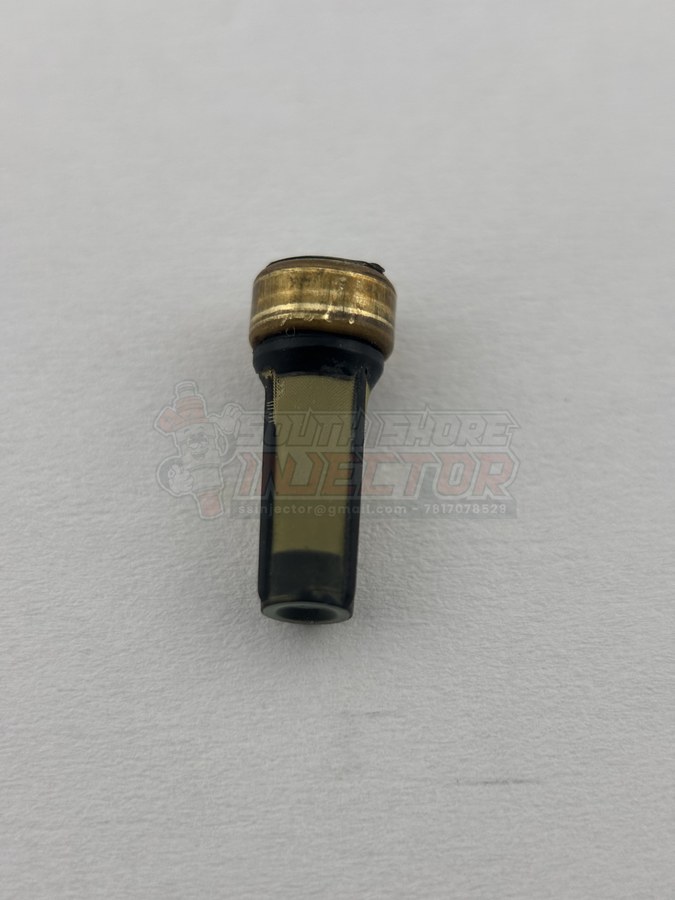
Rebuilding a set yourself? These inlet filters are the first thing to clog and we sell them separately -- micro basket filter $2.99 for CDH and Toyota style, Bosch EV14 $3.49 for EcoBoost, WRX, BMW N-series and Deka. If you'd rather we flow-test them first, send the set in.
Universal Symptoms of Dirty Outboard Injectors
Regardless of brand, dirty injectors cause the same core set of problems. If you're experiencing more than one of these, injectors should be at the top of your troubleshooting list:
- Hard starting -- especially after sitting for a few days or at the start of the season. The engine cranks and cranks before finally catching, or it fires and immediately dies.
- Rough idle -- uneven firing, vibration through the boat at the dock, RPMs bouncing around. The engine sounds like it's running on fewer cylinders than it should.
- Hesitation on acceleration -- you push the throttle and there's a dead spot before the engine responds, or it stumbles and catches. This is especially noticeable when trying to get on plane.
- Loss of top-end power -- the engine doesn't reach its rated WOT RPM. It feels sluggish at speed and doesn't have the push it used to.
- Poor fuel economy -- the ECU compensates for uneven injector flow by running richer across all cylinders. You're burning more fuel to get the same performance.
- Excessive smoke -- more smoke than normal at idle or under load. Incomplete combustion from poor spray patterns.
- Misfires -- random misfires under load or at idle. Can trigger engine alarm codes on some models.
- Surging -- RPMs rise and fall on their own, especially at cruising speed. The engine can't maintain a steady fuel delivery.
The tricky part is that these symptoms overlap with a dozen other problems: bad coils, failing fuel pump, clogged VST filter, water in fuel, bad spark plugs. That's why a lot of people (and mechanics) chase other causes first and end up replacing parts that weren't the problem. Injectors are often the last thing people check, but they should be the first.
Recognize your boat in that list? Cleaning starts at $30 an injector with a two-injector minimum, which is less than most people spend on parts that weren't the problem. Start an order.
Leaking Injectors: The Failure a Scan Tool Won't Catch
Everything above is about restriction -- an injector that can't flow enough. The opposite failure is just as common on outboards and gets diagnosed far less often: an injector that won't shut all the way off.
The pintle has to seat against a machined surface every time the injector closes. Ethanol varnish, salt corrosion, and a worn pintle cap all keep it from seating. Once that happens the injector keeps passing fuel after the engine shuts down, with nothing but rail pressure pushing it through. Fuel drains into the intake or straight into the cylinder while the boat sits on the trailer.
Here is what that looks like on the bench. Both injectors are pressurized and closed -- no pulse commanded. One that seals stays dry.
The symptoms are different from a clogged injector, which is why people chase the wrong thing:
- Hard hot starts -- fine cold, cranks and cranks after a lunch stop. Fuel drained into the cylinder while it sat and flooded it.
- Rough idle that clears once you're underway -- one cylinder starts rich and washes out as soon as there's airflow.
- Raw fuel smell in the bilge or under the cowling after shutdown.
- Fuel wash on one plug -- clean and gray next to the others.
- Fuel economy creeping down a little each season with no other change.
Here's the part that matters: a scan tool cannot see this. It reports what the ECU commanded, not what the injector did mechanically. There is no code for an injector that seals at 90% instead of 100%. The only way to catch it is a leak-down test with the injector off the engine and held at pressure, which is step six of what we do to every set. We've had sets come in for a rough idle where the flow numbers were fine on all six and two of them failed leak-down.
Leak-down is step six on every set we test, not an add-on you have to ask for. Send yours in and you'll see the result for each injector.
If you're chasing this on a Yamaha specifically, we go deeper into the CDH-series injectors and what we see on them in Yamaha outboard injector cleaning.
Yamaha 4-Stroke EFI
Yamaha's 4-stroke outboards are some of the most popular engines on the water, and we clean Yamaha injectors more than any other brand besides Mercury. The F150, F115, F200, and F250 are the most common models we see, but the injector issues apply across the entire EFI lineup.
Common Issues
Yamaha injectors tend to accumulate carbon deposits on the pintle tip, which changes the spray pattern from a fine mist to a partial stream. You won't always notice it at cruising RPM, but at idle and low speed it shows up as rough running and occasional misfires. The F150 in particular is known for this -- there are Hull Truth threads going back years with F150 owners reporting night-and-day differences after injector cleaning.
Yamaha's VST filter screen is another factor. It's the last line of defense before the injectors, and when it gets contaminated, debris passes through to the injectors. Yamaha recommends replacing the VST filter every 300 hours, but a lot of owners don't realize it exists until they're already having problems.
Models We Service
- Yamaha F75, F90
- Yamaha F115 (one of the most popular midrange outboards ever made)
- Yamaha F150 (the workhorse -- we see tons of these)
- Yamaha F200, F225, F250
- Yamaha F300, F350 (V8)
- Yamaha VF115, VF150, VF175, VF200 (V MAX SHO)
Suzuki 4-Stroke EFI
Suzuki outboards are known for reliability, but they're not immune to injector fouling. The DF115, DF140, DF150, and DF250 are the models we see most often.
Common Issues
Suzuki owners tend to notice injector problems as cold-start issues first. The engine is hard to start when it's cold, runs rough for the first few minutes, then smooths out once it warms up. That's a classic partially-clogged injector pattern -- the ECU can compensate once the engine is warm and the O2 sensors are reading, but at cold start it's running on pre-programmed fuel maps and the restricted flow shows.
Suzuki's lean burn technology on some models (like the DF200A and DF250) makes the engines even more sensitive to injector fouling. These engines run leaner than conventional 4-strokes for fuel efficiency, which means any variation in injector flow is amplified. A 10% flow restriction that a conventional engine might hide will cause noticeable symptoms on a lean burn model.
Like Yamaha, Suzuki uses a VST with internal filter screens. E10 fuel sitting over winter breaks down the fuel and the filter material, and both end up in the injectors.
Models We Service
- Suzuki DF60A, DF70A
- Suzuki DF90A, DF100B, DF115A
- Suzuki DF140A, DF150A
- Suzuki DF175A, DF200A (lean burn)
- Suzuki DF250, DF300 (V6)
- Suzuki DF325A, DF350A (contra-rotating)
Honda 4-Stroke EFI
Honda outboards are built like tanks, and the fuel injection systems are generally very reliable. But reliable doesn't mean maintenance-free. We see Honda injector problems most often on the BF115, BF135, BF150, BF200, and BF225.
Common Issues
Honda owners tend to hold onto their engines longer than most, which means we see injectors with a lot of hours and a lot of accumulated deposits. A Honda with 1,500 hours that's never had the injectors cleaned will have significant buildup, even if the owner used fuel stabilizer religiously.
One Honda-specific issue to be aware of: the high-pressure fuel filter. Honda uses a paper filter element between the VST and the injectors, and this filter is designed to collapse and seal when it gets saturated with water or debris. That's actually a safety feature -- it cuts fuel flow to protect the injectors. But the symptom is sudden surging and power loss, which panics a lot of owners. Before assuming the injectors are bad, make sure the HP filter hasn't collapsed. That said, if the filter caught that much debris, the injectors have probably seen some of it too.
Models We Service
- Honda BF75, BF90
- Honda BF115, BF135
- Honda BF150
- Honda BF200, BF225, BF250
Tohatsu 4-Stroke EFI and TLDI
Tohatsu makes a lot more engines than most people realize. They also manufacture outboards for Nissan Marine, and they used to OEM some Mercury models. The EFI models are straightforward and share the same injector issues as Yamaha, Suzuki, and Honda.
The TLDI (Two-Stroke Low Pressure Direct Injection) models are a different animal.
TLDI-Specific Issues
Tohatsu TLDI outboards use both air injectors and fuel injectors, similar to the Mercury Optimax system. The air injectors pressurize the fuel charge for atomization, and both sets can foul. Tohatsu actually issued a service campaign on certain TLDI models for air injector malfunctions, where they redesigned the air injectors and replaced them free of charge.
TLDI engines are also picky about oil. They require TC-W3 oil that's specifically formulated for direct injection -- standard TC-W3 isn't good enough. Running the wrong oil accelerates deposit formation and leads to faster injector fouling. If you bought a used TLDI and don't know what oil the previous owner was running, the injectors are worth inspecting.
For 4-stroke EFI Tohatsu models, the same ethanol and storage issues apply as every other brand.
Models We Service
- Tohatsu MFS50, MFS60, MFS75, MFS90, MFS115 (4-stroke EFI)
- Tohatsu MD40B, MD50B, MD70B, MD90B (TLDI -- air and fuel injectors)
Mercury 4-Stroke EFI
We already have a detailed post on Mercury Optimax injectors, so we won't repeat all of that here. But it's worth noting that Mercury's 4-stroke EFI models (FourStroke and Verado) also get dirty injectors. They're just not as dramatic about it as the Optimax.
Common Issues
Mercury 4-strokes tend to be more tolerant of partial injector fouling than some other brands, partly because the ECU calibration has wider fuel trim ranges. But once the fouling gets past a certain point, the same symptoms show up: rough idle, hesitation, poor fuel economy.
The Verado models (L4 and L6) use higher fuel pressure than conventional port injection outboards, which means the injectors work harder and deposits can build up faster in the high-pressure environment. We see a lot of Verado 150, 200, 250, and 300 injectors come through.
Models We Service
- Mercury FourStroke 75, 90, 115, 150
- Mercury Verado 135, 150, 175, 200, 250, 300, 350, 400
- Mercury Pro XS 4-stroke models
- Mercury Optimax (all models -- air and fuel injectors)
Note: We do not service Evinrude E-TEC or FICHT injectors. Those are a completely different direct injection system with specialized service requirements.
Found your engine in the lists above? We service that family regularly -- ship your set in and get flow numbers back on every injector.
How Often Should You Clean Outboard Injectors?
The standard recommendation is every 300 engine hours or every 3-4 years. That's fine as a baseline, but the real answer depends on how you use the boat.
If you check any of these boxes, you should be on a shorter interval:
- You run E10 fuel -- most people don't have a choice. If ethanol-free gas isn't available at your marina, you're on the accelerated fouling schedule.
- You store the boat over winter -- 5-6 months of stagnant fuel, even with stabilizer, means deposits are forming.
- The engine sits for weeks between uses -- low run hours and long idle periods are worse for injectors than high hours with regular use.
- You boat in saltwater -- salt air accelerates everything.
- The boat is older with original fuel hoses -- degrading fuel lines shed material into the fuel system.
For most recreational boaters in the Northeast running E10 fuel with winter storage, once a year (as part of spring commissioning) is a good interval. It's cheap insurance compared to paying a mechanic to diagnose running problems at $150/hour on the water.
Fuel Additives: Do They Work?
This comes up constantly, so let's set the record straight.
Fuel additives like Yamaha Ring Free, Sea Foam, Star Tron, and Sta-Bil can help prevent light deposits from forming if used regularly throughout the season. They work by keeping fuel system components coated with detergents that prevent carbon and varnish from sticking. Used as part of a maintenance routine, they extend the time between professional cleanings.
What they can't do is fix injectors that are already fouled. Once carbon deposits have hardened inside the injector body, baked onto the pintle, and clogged the micro-filter screen, no additive circulating through the fuel system is going to break that loose. It's like trying to clean a clogged showerhead by running water through it harder -- the blockage is inside, and it needs to be physically removed.
That's where professional ultrasonic cleaning comes in. The injector is submerged in an ultrasonic bath that creates millions of microscopic cavitation bubbles. These bubbles collapse against the deposit surfaces and physically break apart the buildup from the inside out, including areas that fuel flow alone can't reach. After cleaning, the injector is backflushed and flow-tested to verify it's back to factory spec.
Bottom line: use additives as prevention, send them to us when prevention isn't enough.
Clean vs. Replace: When Is Each the Right Call?
Replacement is expensive. A single OEM outboard injector can cost anywhere from $80 to $300+ depending on the brand, model, and whether it's still in production. A full set of 4 or 6 can run $500-1,800. Professional cleaning is $30-35 per injector.
In the vast majority of cases, cleaning restores injectors to within factory flow specs. We test every injector before and after cleaning and provide a detailed report showing the flow rate, spray pattern, and leak test results. If an injector cleans up and flows within spec, there's no reason to replace it.
The only scenarios where replacement makes sense:
- Dead coil -- if the injector's solenoid has an open or shorted winding, it won't fire regardless of how clean it is. This is an electrical failure, not a flow problem. We test resistance on every injector and will let you know if one has a bad coil.
- Cracked body -- physical damage to the injector housing means it can't hold pressure. Rare, but it happens.
- Internal seal failure -- if the injector leaks under pressure after cleaning, the internal poppet or seat is damaged. Also rare.
- Severely corroded internals -- in extreme cases of water contamination or phase-separated fuel sitting for years, the internal components can be corroded beyond what cleaning can fix.
Across the thousands of injectors we've cleaned, the failure rate after cleaning is very low. Most injectors that come in "bad" are just dirty.
What Professional Cleaning Looks Like
We use a GB800 Multi-Port Fuel Injector Tester, the same professional-grade equipment used by OE-level remanufacturers. It was built by GB Remanufacturing's partner Carbon-Zapp. Here's what happens to each injector:
- Resistance check -- we verify the injector coil is within spec (high impedance vs. low impedance) before anything else. If the coil is dead, cleaning won't help.
- Pre-cleaning flow test -- each injector is individually tested for flow rate at multiple RPM setpoints (static, low, and high). This gives us baseline numbers showing how restricted the injector is.
- Ultrasonic cleaning -- the injector is submerged in an ultrasonic bath while simultaneously being pulsed and backflushed. This breaks apart carbon, varnish, ethanol residue, and any other deposits from inside the injector body.
- Backflushing -- cleaning solvent is pushed through the injector in reverse to flush out loosened debris from the internal passages and filter screen.
- Post-cleaning flow test -- the same flow test as step 2, now showing restored flow rates. This is how we verify the cleaning actually worked.
- Leak-down test -- pressurized testing to verify the injector seals properly and doesn't drip when closed. A leaking injector can cause hard starts, fuel wash, and hydro-lock in extreme cases.
- Spray pattern inspection -- visual verification that the spray pattern is a fine, even mist. A partially clogged injector may flow near-spec volume but spray in a stream or uneven pattern, which still causes problems.
- Component replacement -- new o-rings, pintle caps, micro-filters, and seals on every injector. All GB Remanufacturing premium components.
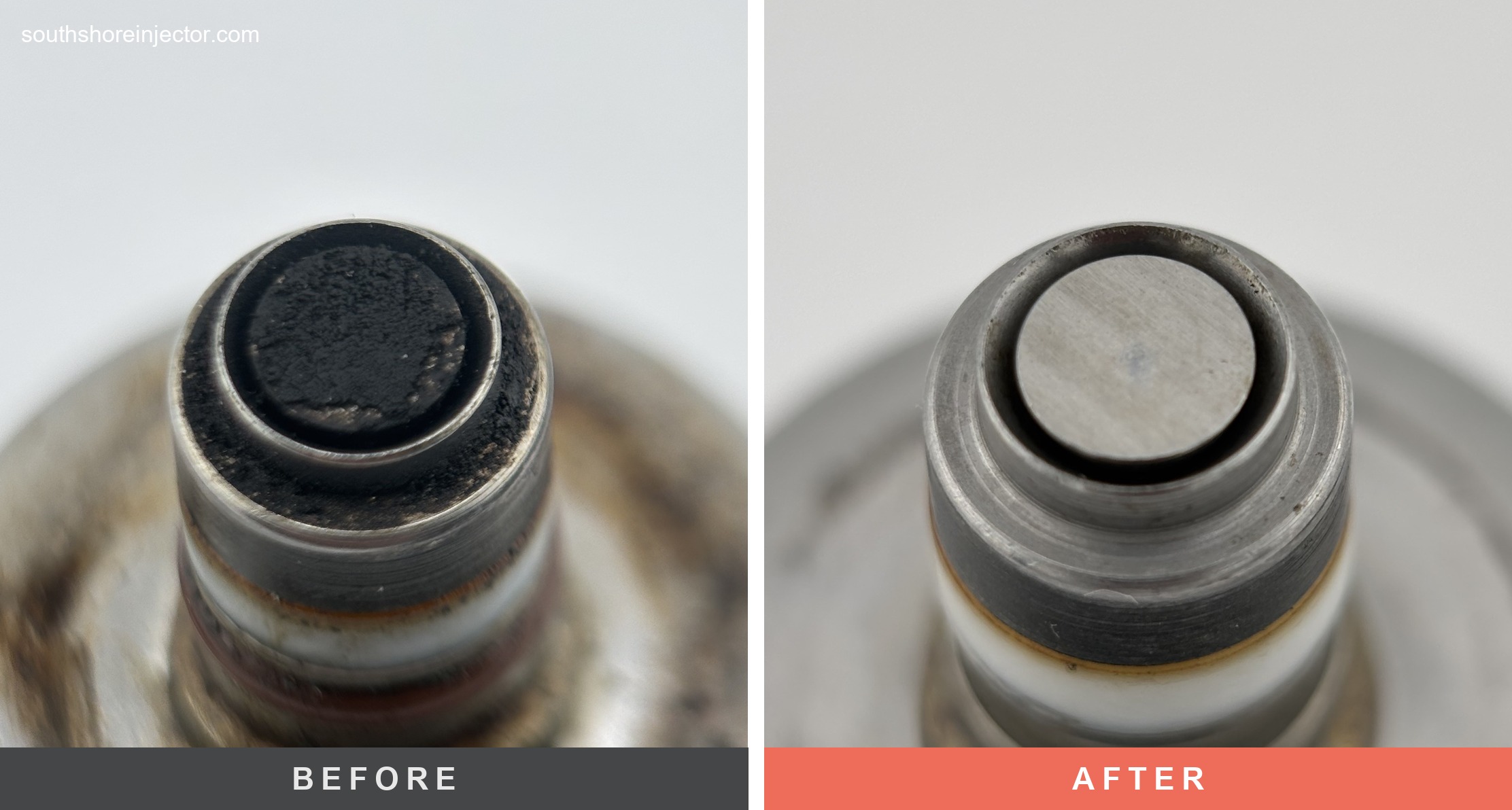
You receive a full Injector Performance Report with the before-and-after data for every injector in the set. You can see exactly how each one was performing and how much the cleaning improved it.
How to Send Your Outboard Injectors for Cleaning
The process is simple:
- Remove the injectors from your outboard (or have your mechanic pull them)
- Fill out the order form on our website
- Ship the injectors to us -- we provide a prepaid shipping label
- We clean, test, and ship them back within 1-3 business days
- Install them back in the engine with any new o-rings and seals we include
If you're not comfortable removing the injectors yourself, most marine mechanics will pull and reinstall them for minimal labor. You can also check out our guide on how to ship injectors for packing tips.
Label your injectors by cylinder number if possible. This lets us report flow data per cylinder so you (or your mechanic) can see if one cylinder was running significantly leaner or richer than the rest.
Prevention Tips
You can't eliminate injector fouling entirely (not with E10 fuel in a marine environment), but you can slow it down significantly:
- Use ethanol-free fuel when available. Not every marina carries it, but if yours does, it's worth the premium. Check pure-gas.org for stations near you.
- Run a quality fuel additive every fill-up. Yamaha Ring Free, Star Tron, or Sta-Bil Marine are all solid choices. The key is consistency -- using it once a season doesn't do much.
- Don't let fuel sit. If the boat is going to sit for more than a few weeks, add stabilizer and run the engine long enough for treated fuel to reach the injectors (at least 10-15 minutes).
- Replace fuel filters on schedule. The VST filter, high-pressure filter (if equipped), and water-separating filter are your injectors' first line of defense. When they fail, everything downstream suffers.
- Winterize properly. Fogging the cylinders, stabilizing the fuel, and running the engine on treated fuel before storage all help. But even with perfect winterization, professional injector cleaning every 1-2 seasons is cheap insurance.
- Inspect fuel lines. Older boats with original fuel hoses are ticking time bombs. Ethanol degrades the rubber from the inside, and the shed material ends up in the injectors. If your fuel hoses are more than 10 years old and haven't been replaced, they're overdue.
The Bottom Line
Outboard fuel injector problems are not a matter of if, they're a matter of when. Every EFI outboard running E10 fuel in a marine environment will eventually deal with fouled injectors. The question is whether you catch it early with preventive maintenance or wait until the engine is running poorly enough to ruin a day on the water.
Professional cleaning is a fraction of the cost of replacement, takes 1-3 days, and gives you verified flow data proving your injectors are working correctly. It's the single most underutilized maintenance item on most boats, and it's often the fix for problems that people spend hundreds of dollars chasing through other parts of the fuel system.
Not near the South Shore? You can ship your injectors to us from anywhere in the US on a prepaid label, both directions.
Key Takeaways
- E10 ethanol fuel + winter storage is the main cause across all brands
- Yamaha 4-stroke EFI, Suzuki DF, Honda BF, Tohatsu MFS/TLDI, Mercury 4-stroke and Verado all see the same problems
- Symptoms: rough idle, hard starting, hesitation, popping under load, poor fuel economy
- Marine injectors should be cleaned every 300 engine hours or 3-4 years, sooner with E10 fuel
- OEM marine injector replacement runs $200-500 each vs $30-35 to clean
- Mercury Optimax air injectors and Yamaha GDI injectors require specialty processes most shops can't do
Is It Actually Your Injectors?
Most of what gets blamed on injectors isn't injectors. Before you pull anything, here's the split we use on the bench, based on what actually turns up when the parts land on our table.
Points at the injectors
- It showed up after the boat sat. Ran fine in the fall, rough in the spring. That's the E10 timeline, and it's the single strongest signal.
- Worst at idle and low speed. At idle the injector is only open a couple of milliseconds, so a restriction costs a bigger share of a small delivery. A set that's 20% apart is miserable at idle and merely down on power at cruise.
- One cylinder reads cooler. Point an infrared thermometer at each exhaust runner after a few minutes of running. A cylinder that's consistently cooler than its neighbors is getting less fuel.
- It's consistent. Same symptom, same conditions, every time. Clogs don't come and go.
- Economy fell off gradually with no other change.
Points somewhere else
- The miss moves around or comes and goes. Wandering misfires are ignition: coils, plugs, stator. A clogged injector stays put on its cylinder.
- Equally bad everywhere, worst at wide open. That's fuel supply, not injectors. Pump, filter, VST, or an anti-siphon valve choking flow.
- Water or phase-separated fuel in the tank. Clean the fuel system first. Cleaning injectors and mailing them back into a bad tank just clogs them again.
- One cylinder with low compression. Mechanical. No amount of fuel fixes it.
- It won't start at all. Clogged injectors make an engine run badly, not refuse to run. Look at pressure and spark.
If you're in the second list, don't send us anything yet. Work through the seven causes in order here and rule those out first. We'd rather you fix the actual problem than pay us to clean parts that were fine.
If It's the First List, Send Them In
Mail-in service for Yamaha, Suzuki, Honda, Tohatsu, and Mercury outboard injectors. $30-35/injector with prepaid round-trip shipping. Every injector comes back with its own before-and-after flow numbers, and if we can't restore one, its service fee comes off your invoice.
Get Started