
Fuel Injector Cleaning and Flow Testing Services
Professional fuel injector cleaning and flow testing for a wide range of gasoline injectors.
$30 to $35 per injector, $15 flat round-trip shipping. Fill out the form and we send you a prepaid label, so you can mail your injectors in from anywhere in the US and get them back in a few days with a full report.
We Service
- Automotive fuel injectors: Ford, Honda, Nissan, Subaru, BMW
- OEM injectors: Denso, Bosch, Delphi, Siemens, Keihin
- Top-feed and side-feed
- Stock and performance applications
- MPFI, GDI, TBI injectors
- Small engine gasoline injectors
- ATVs, motorcycles, UTVs
- Snowmobiles, personal watercraft (jet skis)
- Specialty marine gasoline injectors
- Mercury Optimax air & fuel injectors
- Yamaha GDI
- Tohatsu TLDI
We Do Not Service
- Diesel injectors (no diesel services offered)
- Piezo injectors (piezoelectric GDI, common on some late-model direct-injection engines)
- Ficht injectors
- E-TEC injectors
- Physically damaged injectors (cracked housings, broken connectors, severe corrosion)
If We Can't Fix It, You Don't Pay For It
Not every injector can be saved. Some are electrically failed, some are worn past what solvent reaches, and the bench finds that out before you do. When that happens the service fee for that injector comes off your invoice.
It is per injector, not per order. A set of six where one is finished gets billed as five. You still get that injector back with its numbers on the report, so you know exactly which one to replace instead of buying a whole new set.
- Every injector is flow tested before it ships back, so we find the bad ones, not you
- If a problem turns up after you get them back, email us within 30 days and send that injector in. It goes on the same bench it was tested on
- Where the issue is with our work, we re-service that injector or refund its service fee
This covers the service fee for the injector in question. It does not cover the injector itself, or the labor to remove and reinstall it. Full details in our terms of service.
Our Process
The same eight steps on every set, in the same order, so the before-and-after numbers mean something.
Submit Your Order
Fill out the service form and we send a prepaid shipping label, so you can mail your injectors in from anywhere in the US through our mail-in service.
Resistance Check
Every injector has its coil measured first. A shorted or open coil is an electrical fault that cleaning cannot fix, and finding it now means you are not paying to clean an injector that needs replacing.
Pre-Cleaning Flow Test
Each injector is tested individually at static, low and high setpoints. This is the baseline, and it is the number that shows how restricted the set actually was. Spray pattern and leak-down are recorded here too.
Ultrasonic Cleaning
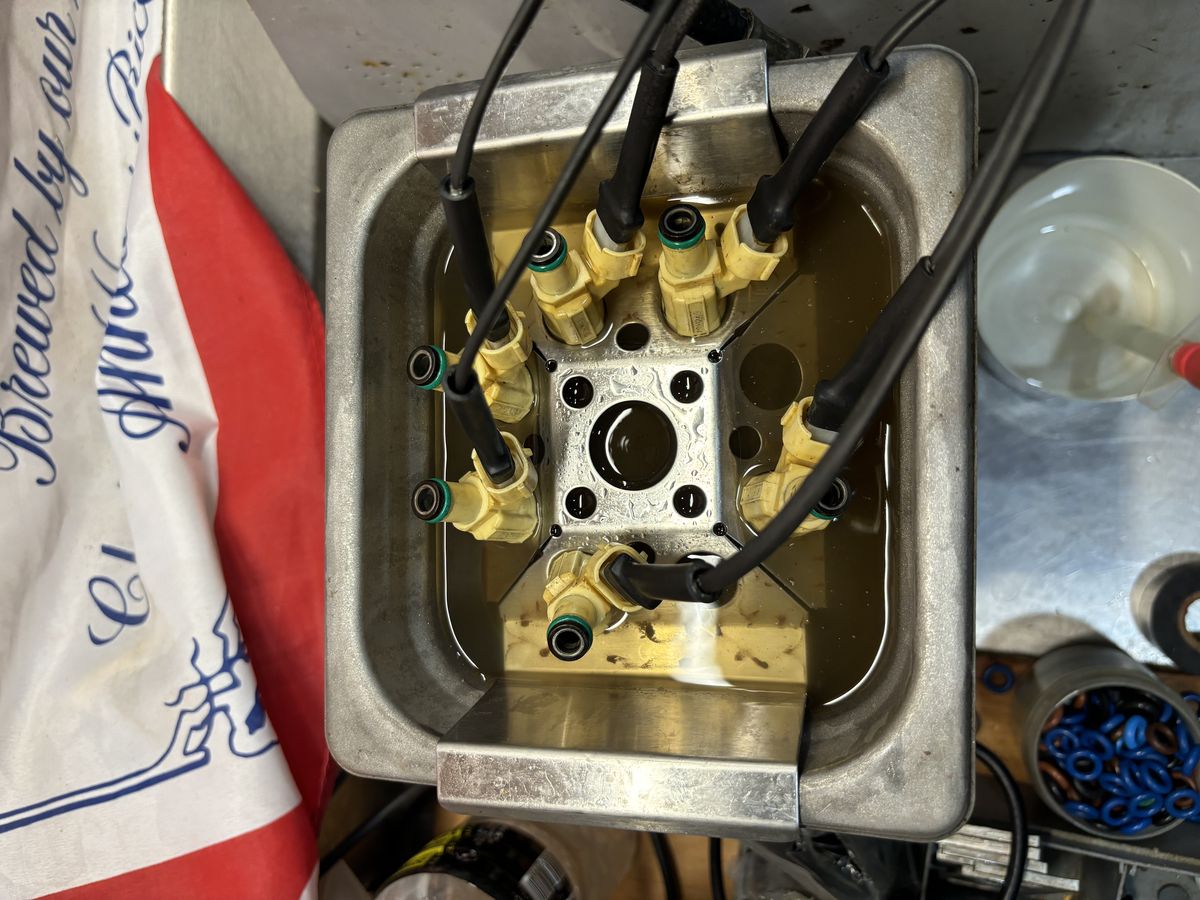
The injector is submerged in an ultrasonic bath while being pulsed and backflushed, which breaks apart carbon, varnish and ethanol residue from inside the body rather than just off the outside.
Backflushing
Solvent is driven through the injector in reverse, pushing loosened debris back out of the inlet instead of further into the internal passages.
Component Replacement (Injector Rebuild)
New o-rings, pintle caps, micro-filter baskets and seals, included in the price rather than quoted separately as a fuel injector rebuild. This depends on the design: on some injectors the parts are not sold on their own, and on others they only come inside an assembly that costs more than the cleaning does. When that happens we clean and test what is on the injector and say so, instead of adding a part cost you did not agree to.
Post-Cleaning Flow Test
The same test as step three, on the same bench at the same setpoints, so the comparison is honest rather than flattering. This is the "after" column on your report.
Leak-Down and Return
Held at pressure with no pulse commanded to confirm it seals shut, then packed and returned on a prepaid label with the full performance report.
What Cleaning Actually Fixes
Injectors rarely fail outright. They drift. Deposits build on the pintle and in the micro-filter, flow drops a few percent at a time, and the set gets progressively less even. The engine does not throw a code for that, it just gets worse in ways people blame on other parts.
Cleaning and testing addresses:
- Uneven fuel delivery between cylinders. The main one. One injector down against the others makes that cylinder run lean while the ECU enriches the whole bank to compensate.
- Rough idle and hesitation. Most noticeable at low load, where small differences in delivery are a larger share of total fuel.
- Misfires under load. Imbalance past about 5% is where these typically start.
- Poor fuel economy. Running rich to cover one weak injector costs fuel across every cylinder.
- Hard starting, especially hot. Often a leaking injector rather than a clogged one, which is why leak-down is a separate test.
- Spray pattern faults. An injector can flow close to spec and still spray a stream instead of a mist. Volume testing alone will not catch it.
What it will not fix: a shorted or open coil, a cracked body, a seized pintle, or wear past the point solvent reaches. Those are replacement, and the bench identifies them in the first two steps rather than after you have paid for a clean.
The Equipment
Everything runs on a GB800 multi-port fuel injector tester, built by GB Remanufacturing's partner Carbon-Zapp. It is the same class of equipment OE-level remanufacturers use, and it is the reason we can hand back numbers rather than an opinion.
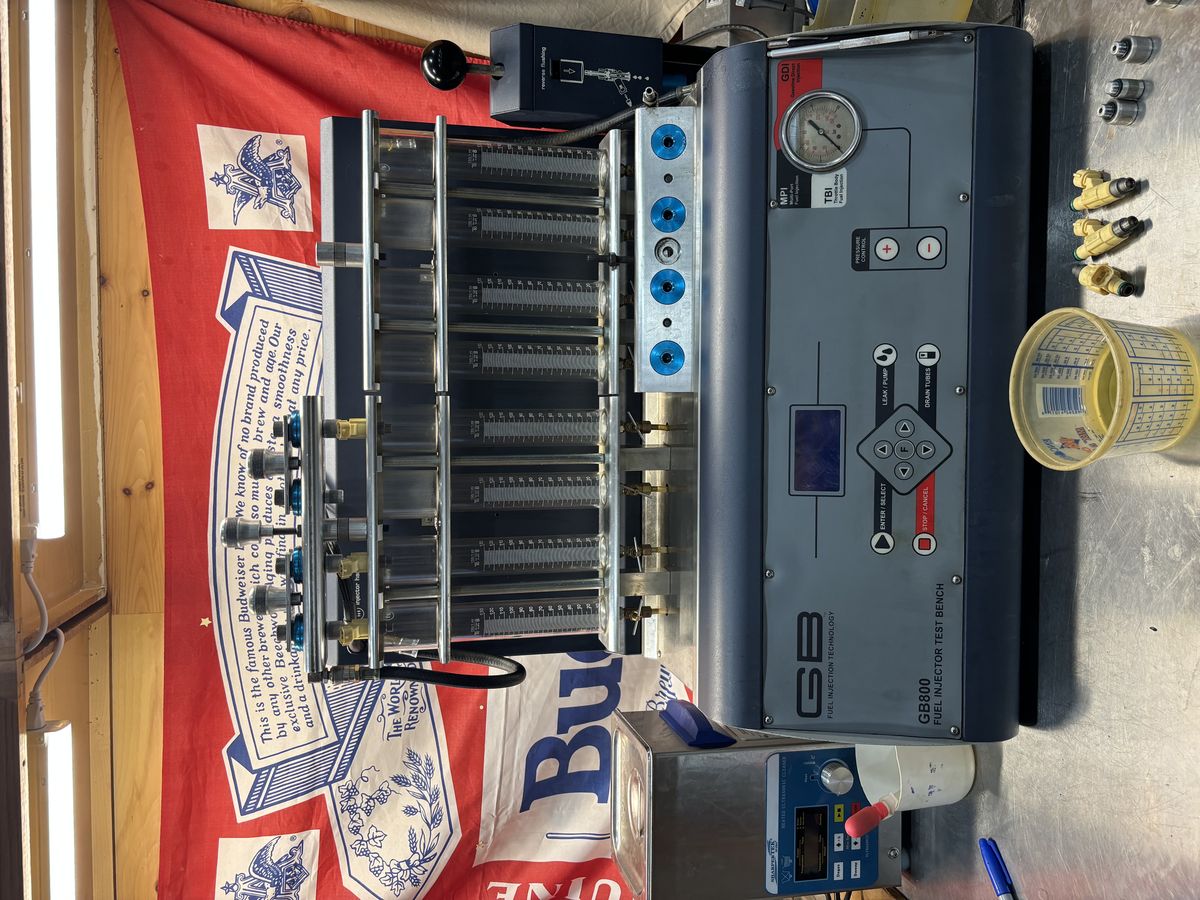
On each injector it logs four things before and after cleaning: coil resistance in ohms, ten-second open flow, sixty-second pulsed flow, and leak-down at static pressure. Spray pattern is inspected visually against the same reference each time.
Testing before and after on the same bench at the same setpoints is what makes the comparison honest. A shop that only tests after cleaning can tell you an injector is in spec. It cannot tell you whether cleaning did anything.
What the Results Look Like
We logged every injector that came across the bench and published the numbers, including the cases where cleaning did not help. Across 2,359 injectors tested since 2022, on 346 sets with complete before-and-after data:
- 79% of sets arrived more than 5% out of balance, and 48% were more than 10% out.
- The average set arrived with about 18% spread between its best and worst injector.
- After cleaning that spread dropped to about 9%, and sets over 10% out fell from 48% to 24%.
- Only 8 injectors out of 2,359 tested electrically dead, so a genuinely failed injector is rare.
The honest reading of that: cleaning is very good at pulling a set back into balance, and balance is what you feel. It is not magic. Roughly a quarter of sets are still more than 10% apart afterwards, usually because one injector is worn rather than dirty, and the report tells you which one.
The full study is here, with the distributions and the method.
Our Work
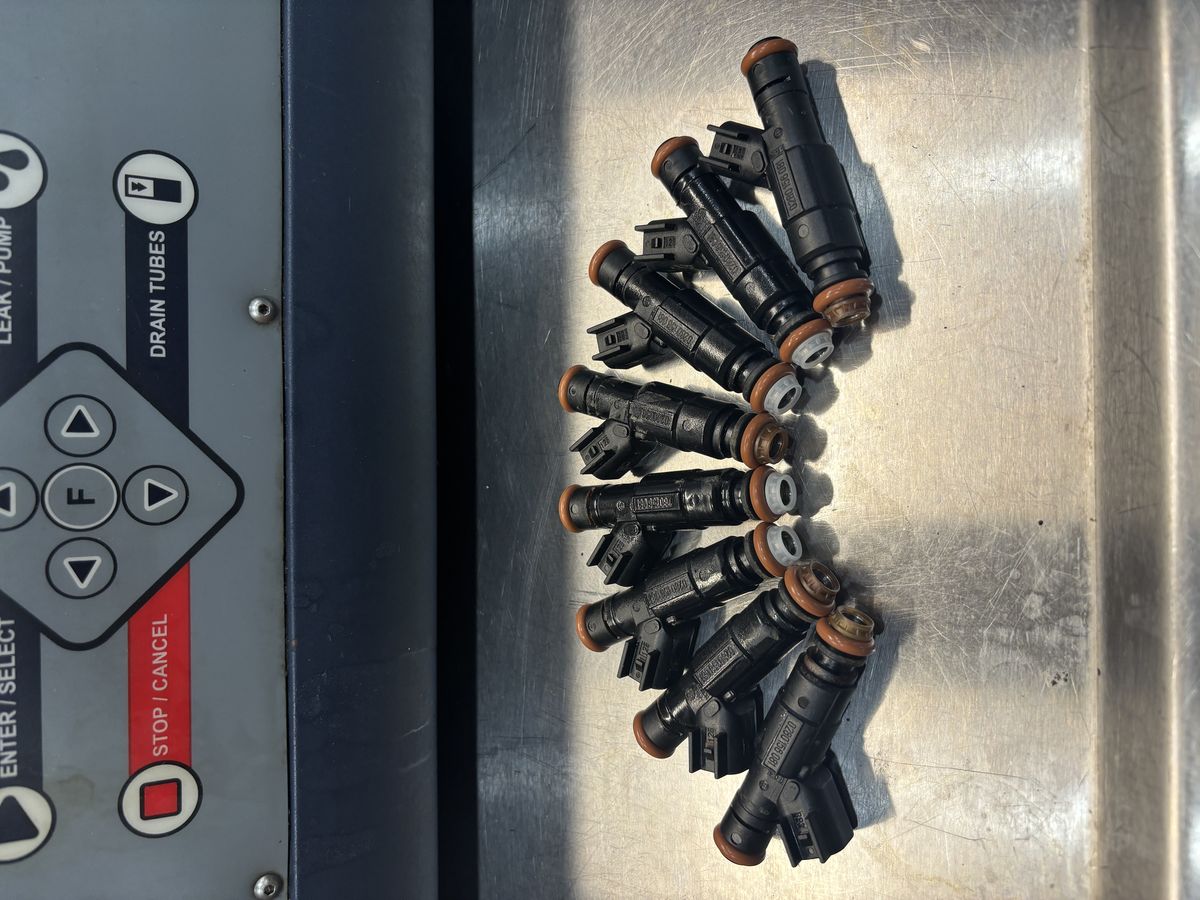
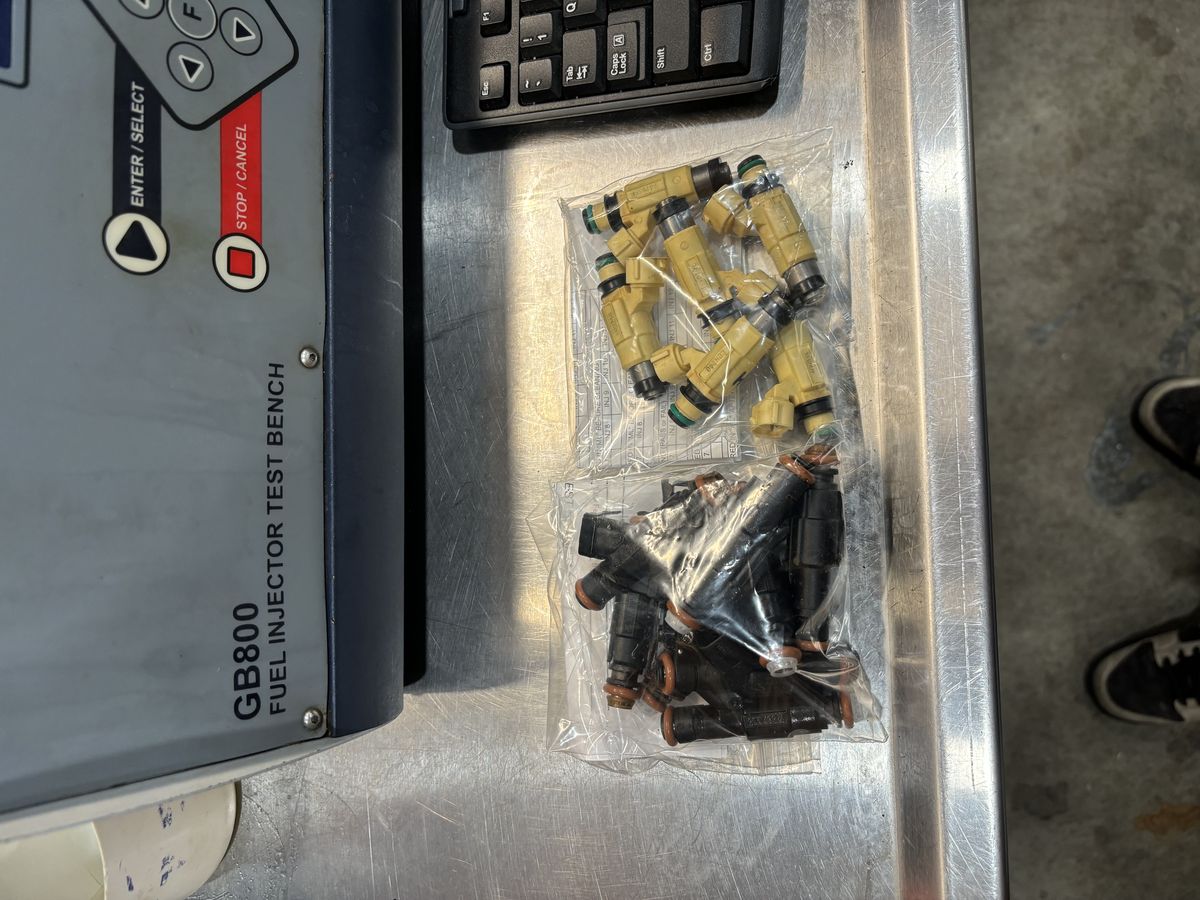
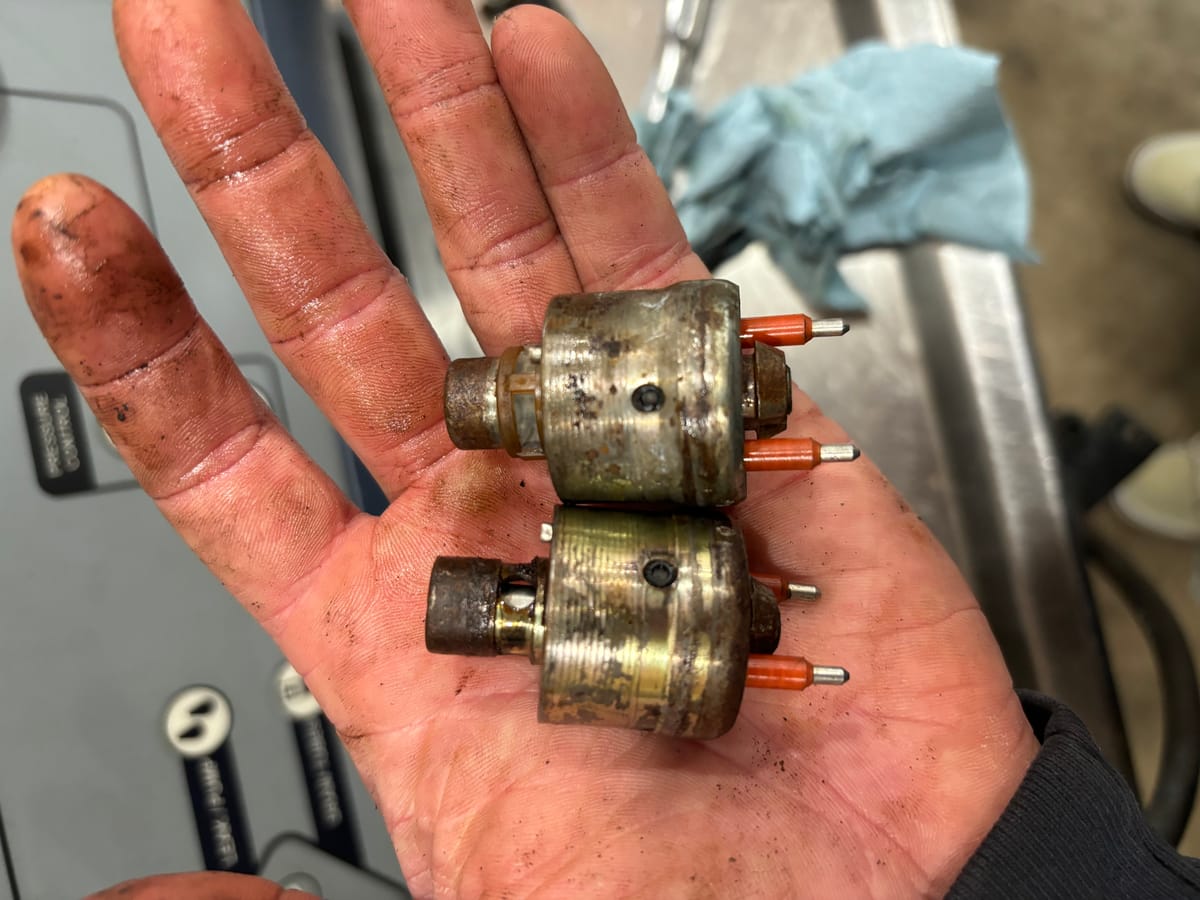
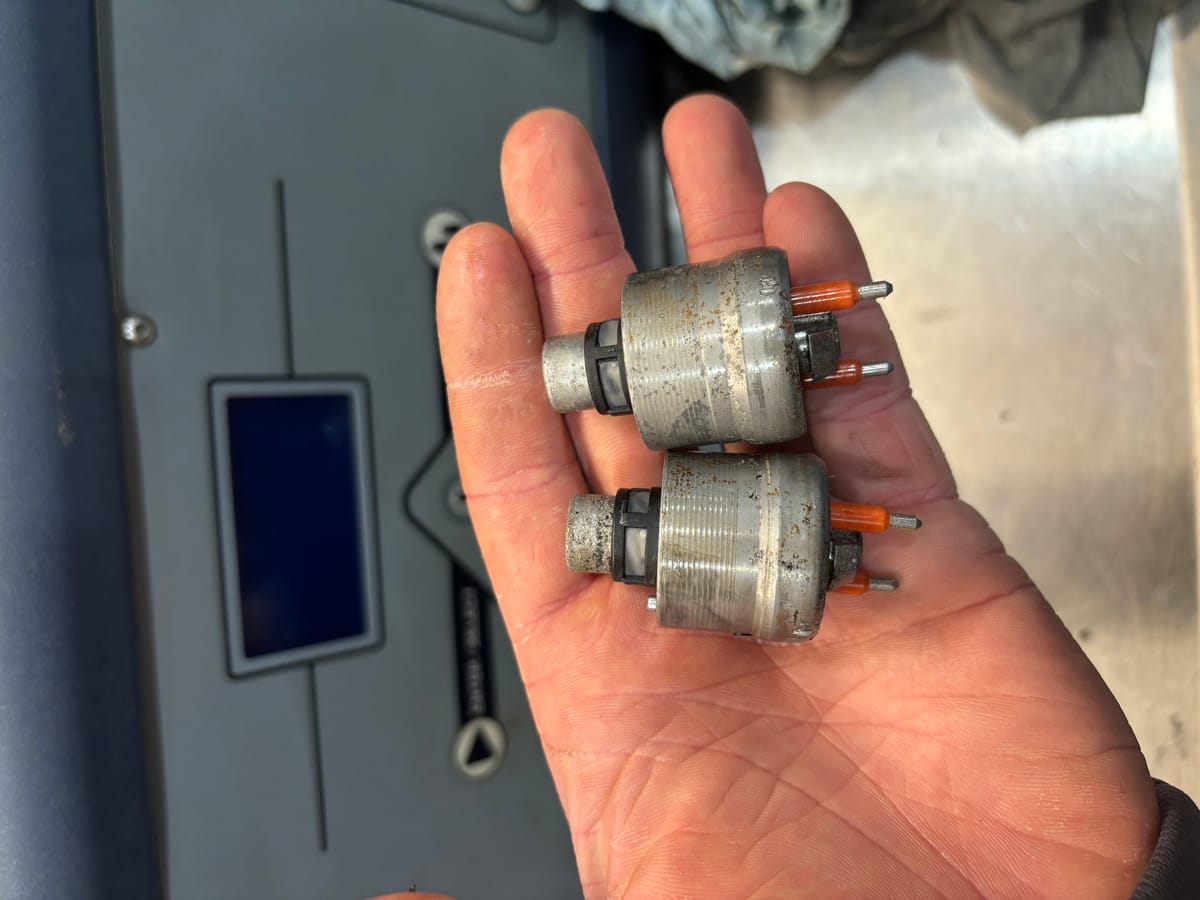
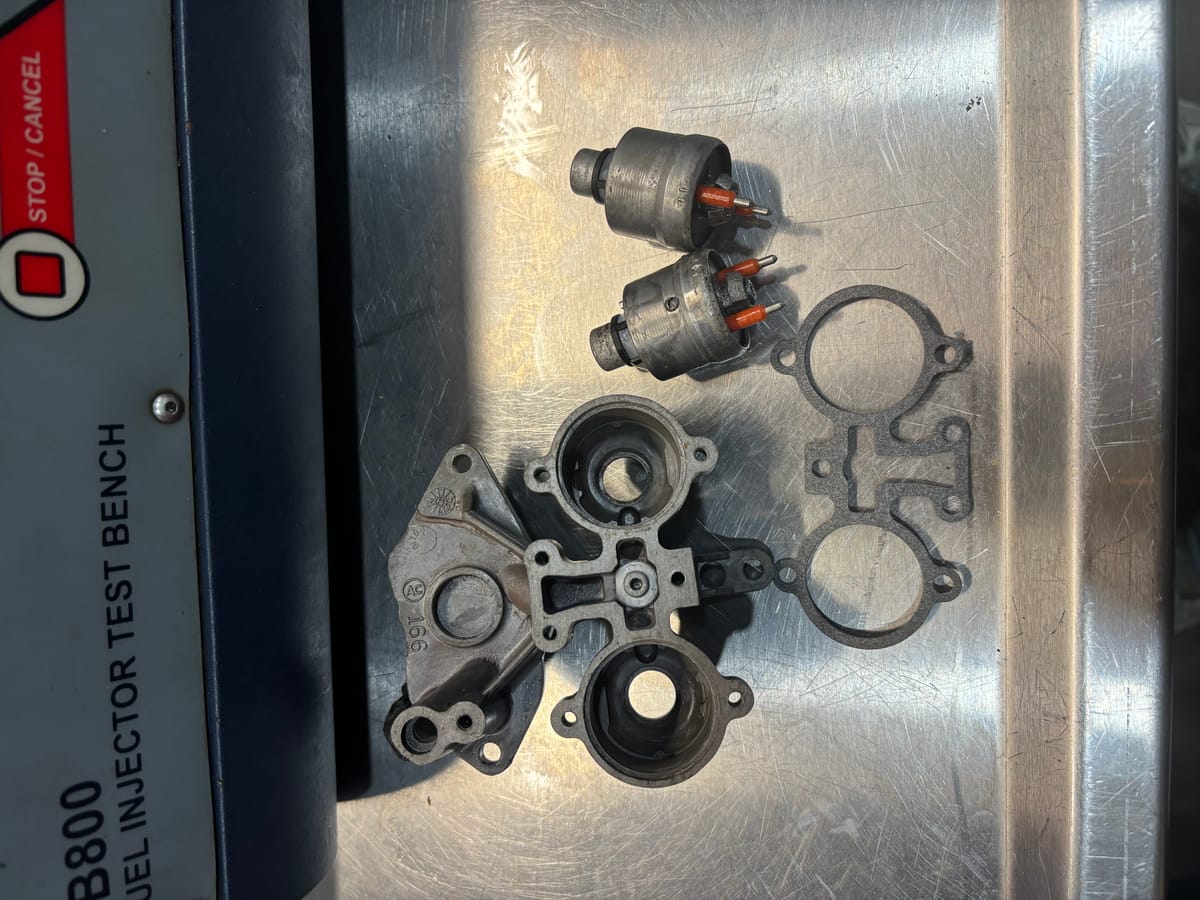
Real photos from our shop. Professional equipment, real results.

Frequently Asked Questions
How does ultrasonic fuel injector cleaning work?
Can you clean performance or aftermarket injectors?
How do I ship my fuel injectors for cleaning?
How long does fuel injector cleaning take?
What is flow testing and why does it matter?
Do you replace O-rings and filters when cleaning injectors?
Is this a fuel injector rebuild or just a cleaning?
Related Reading
What 2,359 Flow Tests Taught Us
Our bench data from four years of cleaning — when cleaning works, when it doesn't, and by how much.
Read →Healthy vs Bad Injectors
How to tell a healthy fuel injector from a bad one — visually, on the bench, and in the data.
Read →How Fuel Injectors Work
The mechanics of how a fuel injector actually delivers fuel, and why that matters for cleaning.
Read →Why Is My Car Misfiring?
Seven common causes of engine misfires — how to tell injector misfires from coil, plug, or compression issues.
Read →Outboard Running Rough? 7 Causes
Marine diagnostic guide for rough-running outboards — what to check before tearing into anything mechanical.
Read →How To Remove Fuel Injectors
Step-by-step injector removal — what tools you need, what to watch for, and when to call a mechanic.
Read →