
Does Fuel Injector Cleaner Actually Work?
Fuel injector cleaner additives like Seafoam and Techron work for light maintenance on injectors that are already clean. They cannot remove hardened deposits, fix flow imbalance, or restore damaged spray patterns. If your injectors are causing real problems (misfires, rough idle, poor mileage), you need professional ultrasonic cleaning and individual flow testing.
Past what a bottle can fix? You can send your injectors in here for ultrasonic cleaning and flow testing.
You're at the auto parts store and there's an entire shelf of fuel injector cleaners. Seafoam, Lucas, Chevron Techron, Royal Purple, STP. They all promise to clean your injectors, restore performance, and improve fuel economy. Some of them cost $8. Some cost $25. And they all say roughly the same thing on the bottle.
So do they actually work? The short answer: kind of, but probably not the way you're hoping.
What Fuel Injector Cleaner Products Actually Are
The bottles you pour into your gas tank are fuel additives. They contain detergent compounds like polyisobutylene (PIB), polyetheramine (PEA), or polyisobutylamine (PIBA) that dissolve light carbon deposits as fuel passes through the injector.
Think of it like mouthwash. It helps with surface-level stuff if you use it regularly. But if you haven't brushed your teeth in two years, mouthwash isn't going to fix the problem.
What They Can Do
Fuel additive cleaners are decent for prevention. If your injectors are relatively clean and you use a quality additive (Techron or Seafoam are the most proven) every 5,000-10,000 miles, they can help slow down deposit buildup. Think of it as maintenance, not repair.
If you have very mild buildup, say your car sat for a few months and is idling a little rough, a tank of Techron might smooth things out.
What They Cannot Do
Here's where the marketing falls apart. Fuel additive cleaners cannot:
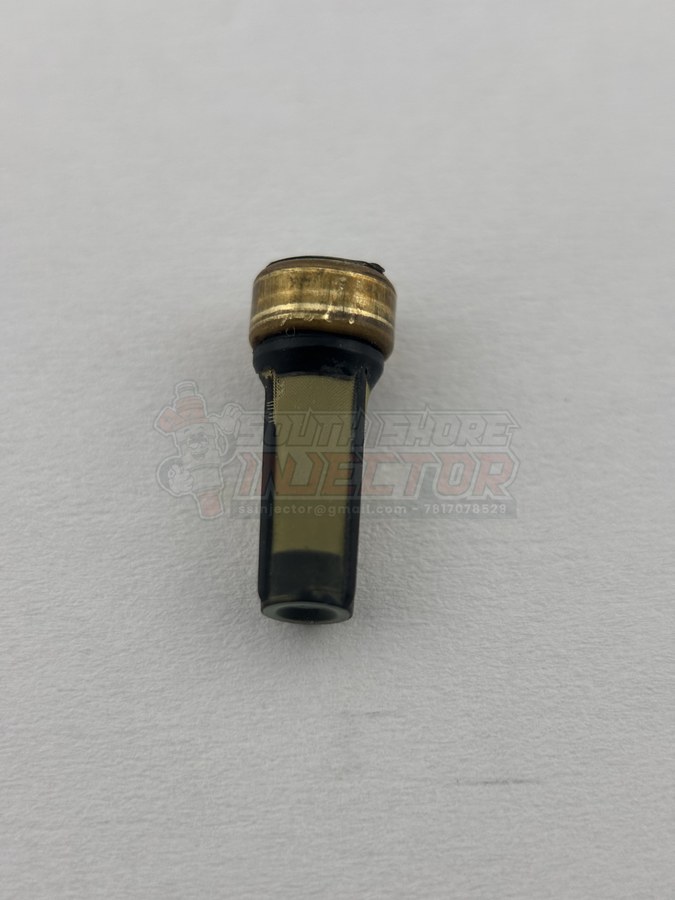
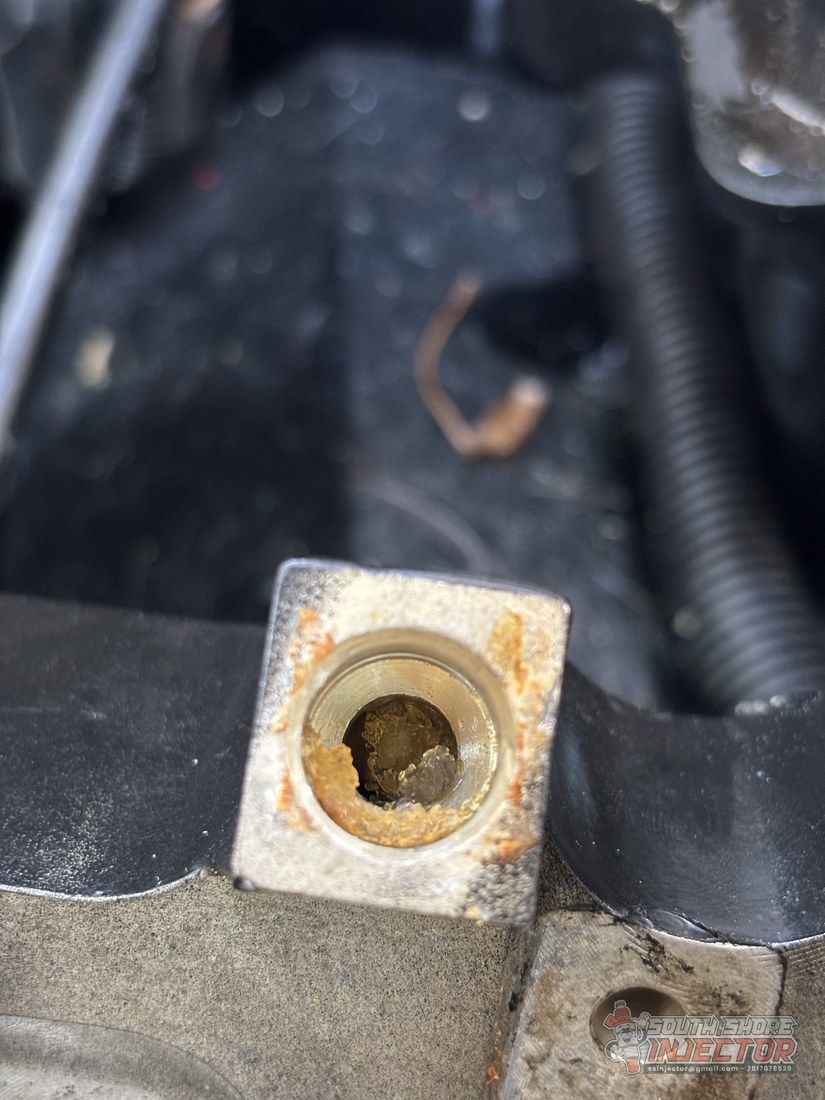
- Remove hardened carbon deposits. Once deposits have baked onto the injector pintle or inside the nozzle from heat cycling over thousands of miles, no additive passing through with fuel flow is going to dissolve them. Contact time is fractions of a second, nowhere near enough to break down hardened buildup.
- Fix flow imbalance. If one injector is flowing 12% less than the others because of internal blockage, additives won't equalize them. You need each injector individually cleaned and tested.
- Restore spray patterns. A clogged nozzle doesn't just reduce flow. It changes the spray shape from a fine mist to an uneven stream, which means poor atomization and incomplete combustion. No additive fixes spray geometry.
- Tell you what's actually wrong. Even if you pour cleaner in and the car runs a little better, you still don't know the condition of each injector. You're guessing.
On-Car Cleaning Services
Some shops offer on-car injector cleaning where they run a pressurized cleaning solution through the fuel rail while the engine runs. This is better than a bottle additive because the chemical contact time is longer and the solution is stronger.
But on-car cleaning has the same fundamental limitation: it cleans all injectors at once and you can't test individual injector flow or spray patterns. You're cleaning blind. If one injector is 15% clogged and another is fine, you have no way to know.
What Actually Works: Ultrasonic Cleaning
Professional off-car cleaning is a completely different process. The injectors come out of the engine and go into an ultrasonic cleaning bath. An ultrasonic transducer generates high-frequency sound waves (around 40 kHz) that create millions of microscopic cavitation bubbles. These bubbles collapse on contact with every surface of the injector, including inside the nozzle orifice where no chemical can reach.
After the ultrasonic bath, each injector is backflushed with cleaning solution to push out loosened deposits from the internal passages. Then each one goes on the flow bench individually.
Flow testing is what really matters. It measures exactly how much fuel each injector delivers, both held open (static flow) and pulsed at different duty cycles (dynamic flow). You get actual numbers showing whether each injector is in spec, how balanced the set is, and whether any need to be replaced.
No bottle, no on-car cleaning, and no additive can give you that information.
When to Use an Additive vs. Professional Cleaning
Use an additive when:
- Your car is running fine and you want to maintain clean injectors
- You're doing preventive maintenance every oil change
- The car sat for a couple months and idles a little rough
Get professional cleaning when:
- You're experiencing symptoms like rough idle, misfires, or poor fuel economy that aren't going away
- Your injectors have 60,000+ miles without being serviced
- You tried an additive and nothing changed
- You want actual data on how each injector is performing
- You're building a motor and want verified, matched flow rates
Not sure whether your injectors are actually bad or just need light maintenance? See how to tell a healthy injector from a bad one.
The Bottom Line
Fuel injector cleaner additives are fine for light maintenance on injectors that are already relatively clean. But if your injectors are actually causing problems (misfires, rough idle, poor mileage, hesitation), a $10 bottle from the auto parts store is not going to fix it. A clogged fuel injector needs to come out, get ultrasonically cleaned, and get individually flow tested. And if you're weighing the money, cleaning at $30 to $35 an injector is a fraction of what replacement runs, which is exactly why we break down cleaning vs. replacement in a separate guide.
Every set we service gets before-and-after flow data so you can see exactly what changed. No guessing. If you're ready to go that route, here's how to ship your injectors for cleaning.
Key Takeaways
- Fuel additives are decent for prevention, not repair
- Use Techron or Seafoam every 5,000-10,000 miles to slow deposit buildup
- Additives cannot fix hardened carbon, flow imbalance, or damaged spray patterns
- On-car cleaning is better than additives but cannot test individual injectors
- Only ultrasonic cleaning + flow testing gives you real numbers on each injector
Need Your Injectors Actually Cleaned?
Professional ultrasonic cleaning and flow testing starting at $30/injector with prepaid round-trip shipping.
Get Started