
OptiMax Air Injector Not Firing? It Might Not Be Dead
An OptiMax air injector that reads dead on the boat is almost never electrically failed. The coil is usually fine. What's actually happening is the valve is stuck or the metering passage is clogged with ethanol varnish and winter-storage gum, so it won't open or hold air. Cleaning clears the deposits and brings most of them back to full flow. New air injectors run $150-300+ each from Mercury. Cleaning is $35. Test before you replace.
Here's the situation we see all the time. An OptiMax throws a lean alarm and runs rough, someone chases it down to an air injector that won't fire or won't hold pressure, and the dealer says replace the set. Six air injectors at OEM prices and suddenly you're staring down a bill that costs more than the boat is worth to keep on the water that weekend.
Most of the time, those injectors aren't dead. They're just filthy.
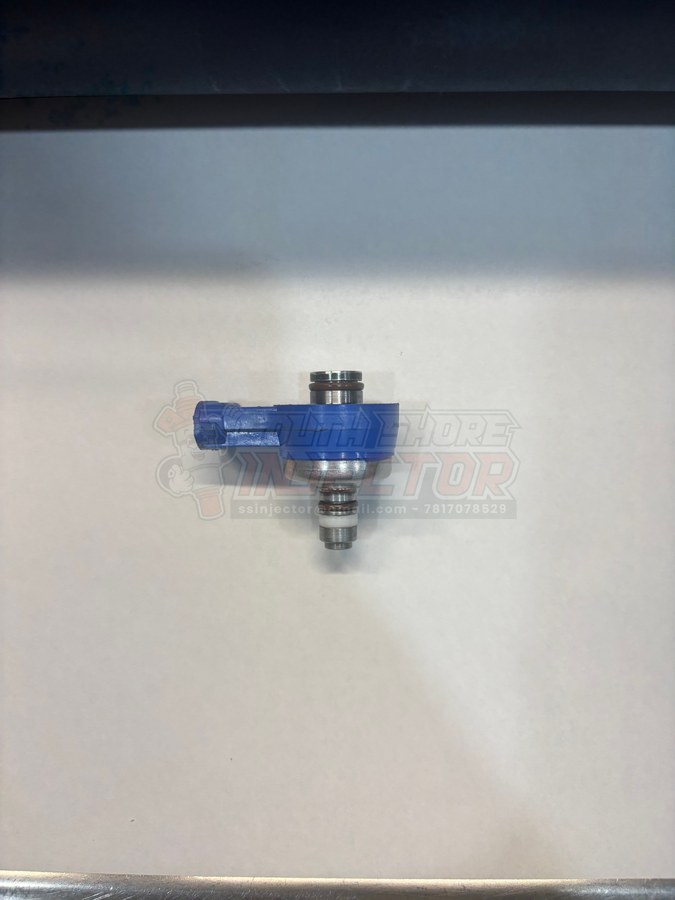
What the Air Injector Actually Does
The OptiMax is an air-assisted direct injection engine, which means every cylinder has two injectors, not one. We covered the full picture in our OptiMax injector cleaning guide, but the short version is this:
- The fuel injector meters the gasoline.
- The air injector meters a shot of compressed air from a belt-driven onboard compressor, and that air blasts the fuel into a fine mist before it enters the cylinder.
Good atomization is the whole point of the OptiMax design. When the air injector isn't opening cleanly, the fuel doesn't atomize, and the cylinder runs lean or misfires. Lean cylinders run hot, and that heat is what can trip Mercury's Engine Guardian System into pulling your power back to protect the motor. So the lean alarm, the rough running, and in a bad case the guardian RPM limit all trace back to the same fouled injector.
"Dead" Usually Means Stuck, Not Failed
This is the part most people get wrong. When an air injector stops working, the assumption is the injector failed. But the solenoid coil inside these things rarely dies. When we put a set on the bench, the coils read right around 2 ohms across the board, healthy and consistent, even on the ones the customer swore were dead.
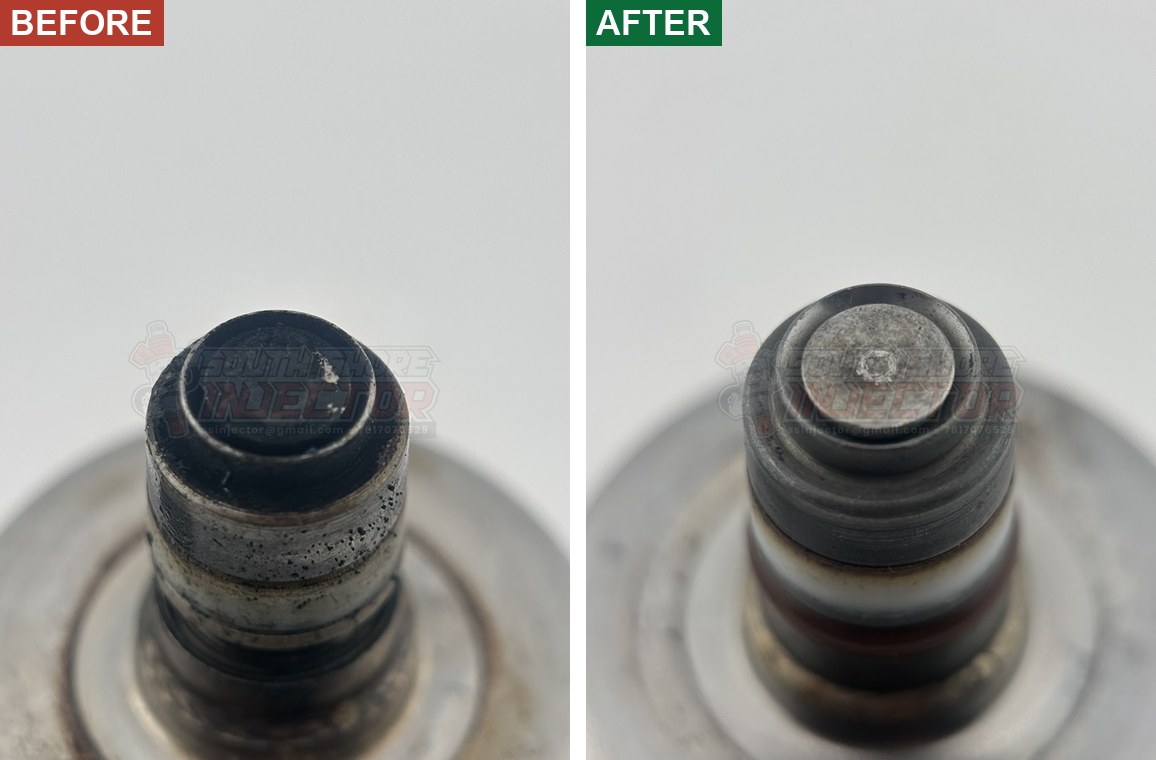
The problem is mechanical. Ethanol fuel absorbs moisture, and after a marine engine sits through a winter, the fuel breaks down and leaves a gummy, varnish-like residue behind. In an air injector, that residue does two things: it coats the pintle and valve so it sticks shut, and it narrows or blocks the tiny metering passage the air moves through. Electrically the injector is fine. It just physically can't open, or it can't move enough air to matter.
That's good news, because a stuck valve and a clogged passage are exactly the kind of thing that comes back with cleaning. A truly burned-out coil does not.
Symptoms That Point to a Fouled Air Injector
- Lean alarm, and if it runs lean and hot long enough, the Engine Guardian System pulling your RPM down
- Rough idle at the dock, uneven firing, one cylinder that feels down
- Hard starting or long cranking, especially first start of the season
- Hesitation and a soft hole shot
- Excessive smoke from poor atomization
- Air pressure or fuel-delivery fault codes
These overlap heavily with dirty fuel injectors and even with bad coils or a weak air compressor, which is why guessing gets expensive. Our outboard running rough diagnostic guide walks through the order you should actually check things in.
Why Replacing Is Usually the Wrong First Move
Two reasons. First, the money: a new OptiMax air injector is $150-300+ each, and you rarely have just one acting up. Second, and this is the one people miss, if one air injector fouled from your fuel and storage habits, the rest of the set is fouling the same way on the same timeline. Swapping the one that finally quit just means you're back here next season with the next one. Cleaning the whole set at once resets all six.
How We Bring Them Back
Every injector gets pre-tested first so we know what we're starting with, then goes through ultrasonic cleaning and backflushing to break down and clear the deposits, then gets flow tested again so we can prove it moves air and holds pressure the way it should. It's the same core process as our standard fuel injector cleaning service, tuned for the air side.
The result is what matters. Most of the stuck ones come back, flowing and holding air the way they're supposed to. On the bench each one either passes or it doesn't, and we tell you which. Nobody gets a dead injector back with a cleaned sticker on it.
We Publish the Bench Data
We log every set we run. You can see real OptiMax injectors we've serviced in our recently serviced database, including the blue air injector (883078A3), the black air injector (8M6001744), and the OptiMax fuel injector (Siemens 37001), each with the before-and-after numbers off our bench. That's the report you get back with your own set.
Blue vs. Black Air Injectors
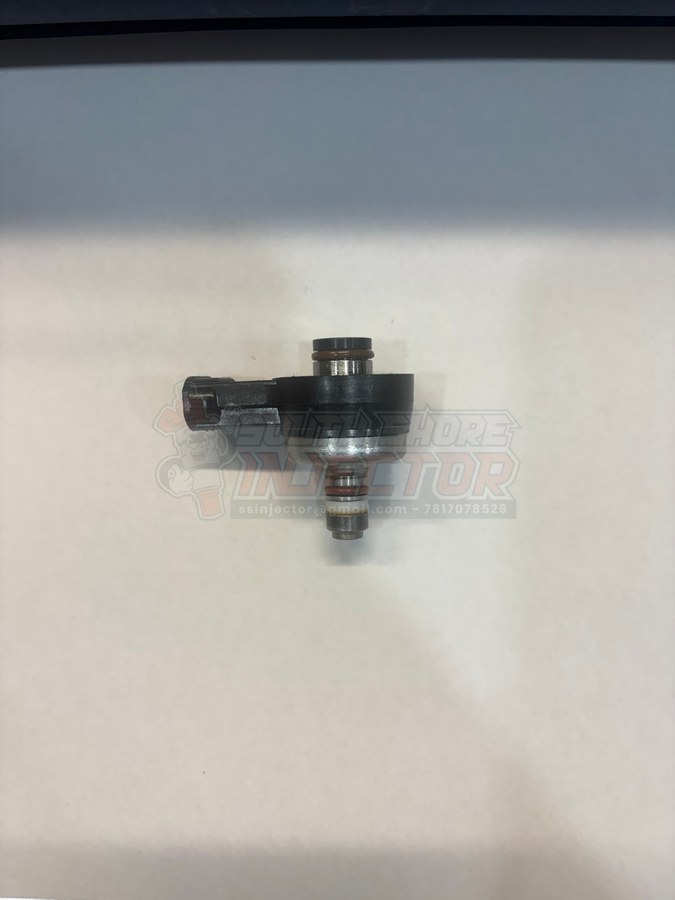
One thing that trips people up: Mercury lists a blue air injector and a black air injector under separate part numbers. On our bench they share the same body and test identically, so functionally they're the same injector. But the part numbers are how a dealer looks yours up, so match the color you pulled off until Mercury tells you otherwise. Either color cleans up the same way.
When It Really Is Dead
We're not going to pretend cleaning saves everything. Once in a while an air injector is genuinely finished: internal corrosion that ate through, physical damage to the valve, or an actual open coil. It happens, mostly on engines that ran water-contaminated fuel or sat wet for years. But that's the exception, not the rule, and the only way to know which camp yours is in is to test it, not guess. When one is truly dead, we flag it in your report so you're only replacing what actually needs replacing.
Cost
Air injectors are $35 each. A set of six is $210 plus $15 flat round-trip shipping. Set that against $150-300+ per injector for new, and cleaning first is the obvious call, especially when most of them come back. If you're weighing it out in general, we broke down the whole cleaning vs. replacement decision in a separate post.
Key Takeaways
- A dead-feeling OptiMax air injector is almost always stuck or clogged, not electrically failed
- The coil usually reads a healthy ~2 ohms even on injectors the customer thought were dead
- Ethanol varnish and winter storage are what jam the valve and block the air passage
- A lean alarm is the classic symptom; a lean cylinder that overheats can trip Guardian, but those overlap with other faults, so test before you throw parts at it
- New air injectors are $150-300+ each; cleaning is $35 and brings most of them back
- Clean the whole set, not just the one that quit, since the rest are fouling on the same timeline
Send in Your OptiMax Air Injectors
We test every one before and after, bring back the ones that are just dirty, and tell you straight if one's actually done. $35/injector with prepaid round-trip shipping.
Get Started