
Yamaha Outboard Fuel Injector Cleaning: The CDH Injectors
Yamaha 4-stroke outboards from the F115 to the F225 run Nikki CDH injectors, the color-coded white, yellow, and orange ones. They're the injector we see most, and they come in clogged, leaking, or both. Symptoms are rough idle, a motor that won't pull past a certain RPM, and hard hot starting. They clean up well, and cleaning at $30-35 each beats replacing them at $100-200+, especially when the cheap online replacements so often fail early.
From our own bench: on the Yamaha and Suzuki outboard injectors we flow-test, cylinder-to-cylinder spread typically comes in around 20% before cleaning and drops to about 7% after. That imbalance is exactly what causes the rough idle and the motor that won't pull past a certain RPM. Full flow-data study here.
Real Yamaha and Suzuki outboard injectors we've cleaned and flow-tested, each with its own before/after bench numbers:
- Yamaha F115 (CDH210)
- Yamaha F200 / F225 (CDH240)
- Yamaha F150 (CDH275)
- Yamaha F150 / F175 / F200 (6DA-13761)
- Suzuki DF60 / DF70 (Nikki EAT901)
If we had to pick the single most common injector that comes across our bench, it's this one. Yamaha 4-stroke outboards are everywhere on the water, and they almost all run the same family of injector. We see them in sets of 4 off the four-cylinder motors and sets of 6 off the V6s, in every color, week in and week out.
What the CDH Injector Actually Is
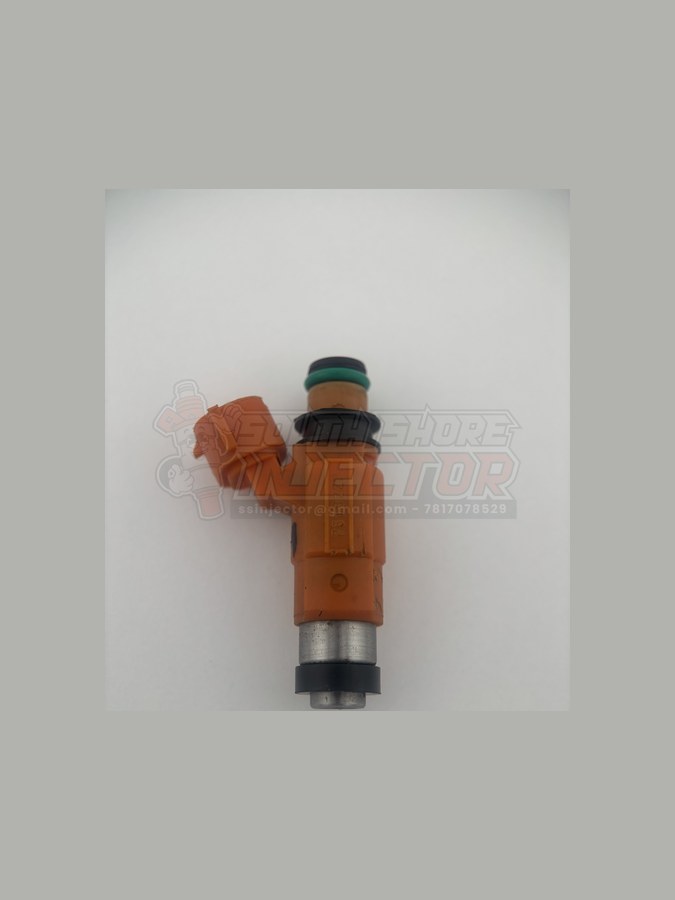
The CDH injector is built by Nikki off a Bosch-licensed design, and Yamaha has used it across most of their 4-stroke outboard lineup for years. The part that confuses everybody is the naming. The exact same injector shows up as a CDH number (CDH210, CDH240, CDH275), as a Yamaha number in the 6-series 13761 family (68V-8A360, 63P-13761, 69J-13761, and others), and under a pile of aftermarket cross-references. Same physical injector, four or five different numbers on it depending on who's selling it. We've had all of them on the bench, so we can tell you they're the same part.
The Color Code: White, Yellow, and Orange
Here's the useful shortcut. The CDH injectors are color-coded by flow rating, and the color is how you tell them apart at a glance:
- Orange (CDH210) - the Yamaha F115
- Yellow (CDH275) - the Yamaha F150
- White (CDH240) - the Yamaha F200, F225, and F250
The rule that matters: match the color you pulled off. The colors mark different flow rates for different displacement motors, and mixing them up means the wrong amount of fuel in your cylinders. Colors and fitment can shift a little by model year, so if you're ever unsure, go by the injector you removed, not by a chart.
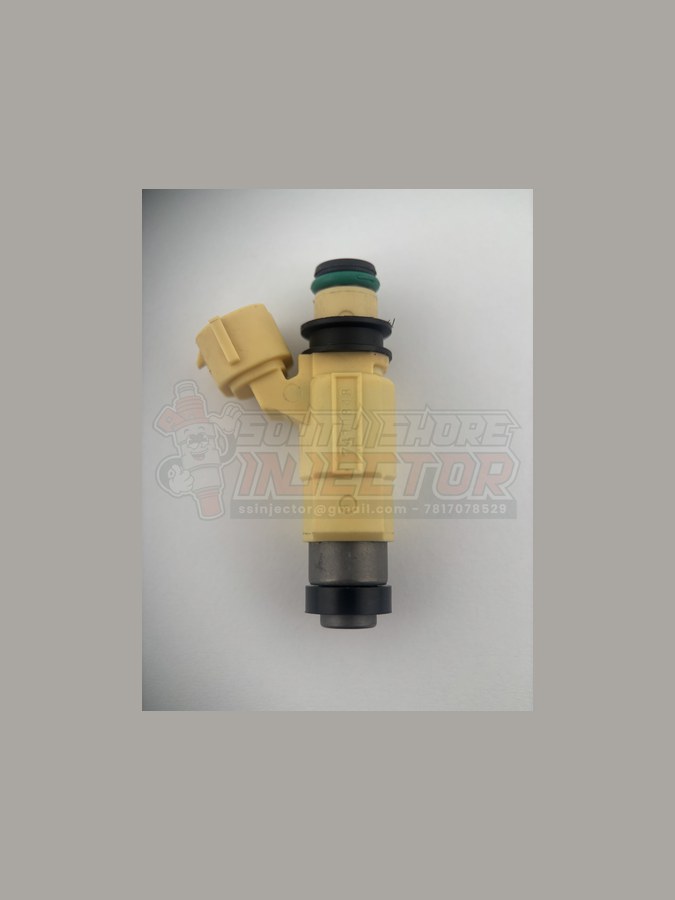
You can see real examples of each in our recently serviced database, with the before-and-after flow numbers off our bench: the CDH210 (F115), the CDH240 (F200/F225), and the CDH275 (F150), plus the closely related 63P-13761 and 6D8-13761 injectors off the smaller motors.
Why They Clog and Leak
Two failure modes, and we see both constantly. Clogging comes from ethanol fuel and winter storage. E10 gas absorbs moisture, breaks down over the off-season, and leaves varnish and gum behind that narrows the injector's spray holes. Leaking is the seat and pintle not sealing anymore, from deposits holding them open or from wear, so fuel dribbles when it shouldn't.
Marine injectors have it worse than car injectors to begin with, salt air, humidity, and a motor that sits for months at a time. Add E10 fuel and a New England winter and you've got the perfect setup for fouled injectors by spring. This is the same story we cover for outboards in general, but the CDH is the one it happens to most, just because there are so many of them out there.
What a leaking CDH actually looks like
This is a set of orange CDH210 injectors off an F115, on our bench at 40 psi with no pulse commanded. A sealing injector holds dry. These don't.
That is fuel entering the cylinder when the motor isn't asking for it. On the water it shows up as a hard hot start, a rough idle that clears once you're underway, and fuel economy that quietly gets worse. A leak like this will not show up on a scan tool, because nothing is electrically wrong with the injector — it fails the leak-down test, and that only happens on a bench.
Both of these sealed back up after cleaning. The seat was being held open by deposits, not worn out. Send yours in and you get the before-and-after on every injector in the set.
What It Looks Like on the Water
The symptoms we hear about over and over with these:
- Rough idle at the dock - uneven firing, shaking, one cylinder that feels down
- Won't pull past a certain RPM - the motor runs fine down low but hits a wall up top and breaks up, because clogged injectors can't flow enough fuel when you ask for it all
- Hard hot starting - a leaking injector bleeds fuel down while the motor sits hot, so it floods or has no pressure to fire on when you try to restart
- Hesitation and a soft hole shot
- Excessive smoke from poor spray patterns
- High fuel burn as the motor compensates for uneven flow
The tricky part is these overlap with coils, fuel pumps, and a plugged fuel filter, which is why people throw parts at it. Our outboard running rough guide walks through the order to check things in so you're not guessing.
They Clean Up
The good news with CDH injectors is they respond really well to cleaning. We pre-test every one, run it through ultrasonic cleaning and backflushing to clear the deposits, then flow test it again to confirm it flows evenly, sprays right, and holds without leaking. Most come back to spec. The ones that came in leaking usually seal back up once the seat is clean.
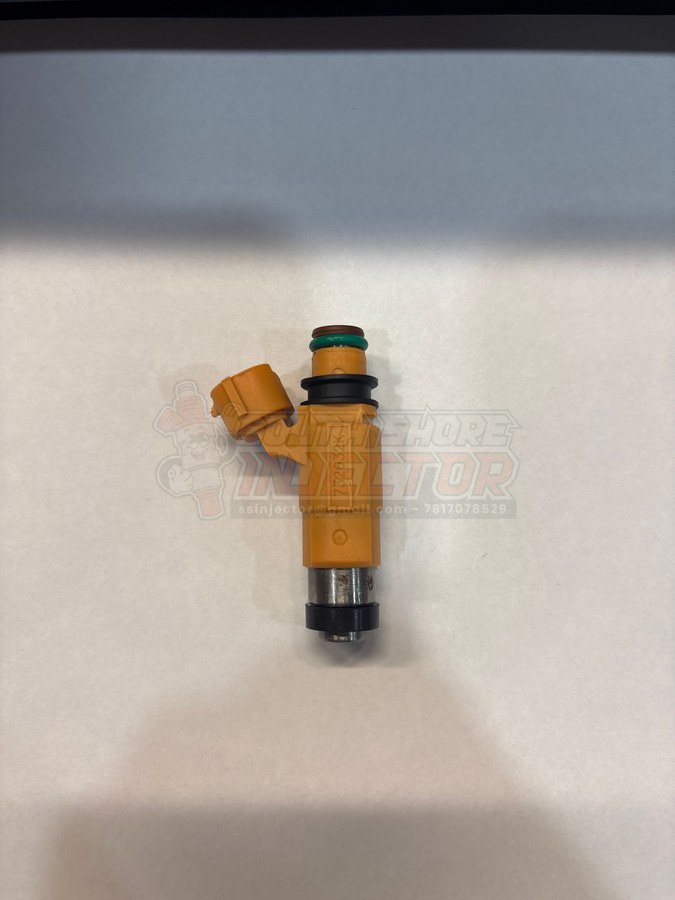
You get a full report back with the before-and-after numbers on every injector in your set, so you're not taking our word for it. If one is genuinely too far gone, corrosion or physical damage, we flag it instead of sending it back with a cleaned sticker on it. That's the honest version of cleaning versus replacement: clean what's recoverable, and only replace what actually fails testing.
Watch Out for the Cheap Replacements
When a Yamaha owner decides to replace instead of clean, a lot of them grab the cheap set of CDH or 13761 injectors off eBay or Amazon. We see how that ends. A big share of those are aftermarket knockoffs, not genuine Nikki or Bosch, and they fail early or show up leaking out of the box. You pull the rail, install them, one won't run right, and now you're doing the job twice and buying twice. By then you've spent more than a cleaning or a genuine set would have cost, and you've burned a couple weekends on the water you'll never get back. Cheap replacement injectors are one of the most common false economies we see on these motors.
Cost
Cleaning is $30-35 per injector plus $15 flat round-trip shipping. A set of 4 off an F115 or F150 runs about $135 all in; a set of 6 off an F200 or F225 is about $225. New CDH injectors are $100-200+ each depending on where you buy and whether they're genuine, so a full set of six new can easily run $600-1,200. When cleaning has a strong shot at bringing them back, and with these it usually does, it's an easy call.
Which Yamahas This Covers
The CDH family covers the heart of the Yamaha 4-stroke lineup:
- F115 - orange CDH210, set of 4
- F150 - yellow CDH275, set of 4
- F200 / F225 / F250 - white CDH240, set of 6
The smaller motors, F70, F75, F90, and F100, use a related injector in the same 13761 family (like the 6D8-13761), and they clog and clean up the same way. If you run a Yamaha 4-stroke and it's got any of the symptoms above, the injectors are worth ruling out first. We do it as a mail-in marine service, so you can ship them from anywhere.
Doing the reseal yourself? We sell the same parts we install -- the Yamaha F115 / F150 / F200 seal kit has the inlet filter, both o-rings and the grommet, $9.99 per injector. Worth knowing it only reseals them; it can't clear a clogged pintle or tell you whether one is leaking.
Nowhere near Massachusetts? Mail-in service covers all 50 states, prepaid both ways.
Key Takeaways
- Yamaha F115-F225 4-strokes use Nikki CDH injectors, the most common injector we service
- They're color-coded: orange CDH210 (F115), yellow CDH275 (F150), white CDH240 (F200/F225/F250) - match the color you pulled
- The same injector also carries Yamaha 6-series 13761 numbers, which is why it shows up under several part numbers
- They clog (rough idle, won't rev past a certain RPM) and leak (hard hot starting) - often both at once
- CDH injectors clean up well; cleaning is $30-35 each vs $100-200+ new
- Cheap online replacement sets often fail early or arrive leaking, costing more in the long run
Send in Your Yamaha Injectors
Whatever color they are, we clean, flow test, and leak test every one and send back the data. $30-35/injector with prepaid round-trip shipping.
Get Started